Hoka Speedgoat 7 Review - The Return of the Goat
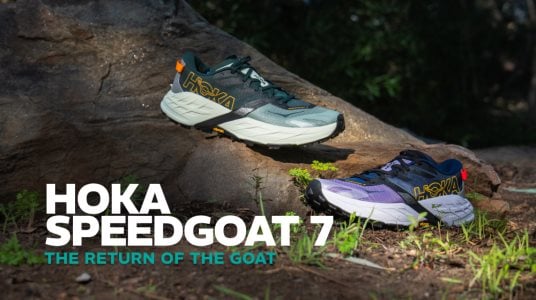
Speedgoat 7: Quick Facts
- 281g (M) // 249g (W)
- 37mm // 32mm stack
- 5mm lugs
What’s the Speedgoat 7 all about?
The Speedgoat story goes all the way back to 2015, when Karl Meltzer (aka “The Speedgoat”) teamed up with HOKA to create a shoe built for one thing: moving fast over technical terrain for a very long time.
It combined max cushioning with surprising agility - something that, at the time, felt pretty revolutionary in the trail space. And it didn’t take long for it to take over. Start lines, podiums, local trails… the Speedgoat became the trail shoe. One of the few trail models to genuinely build a cult following.
By the time the Speedgoat 4 (and the EVO) rolled around, it was everywhere - arguably the most dominant trail shoe of that era.
Then came the Speedgoat 5… And like any shoe with that kind of following, expectations were high… maybe too high. The 5 split opinions. Some loved it, but many long-time Speedgoat fans felt it lost a bit of its identity. The 6 tried to course-correct, but it never fully reclaimed that “GOAT” status, especially as other brands started catching up in the max-cushion trail category.
Which brings us to the 7.
This feels like a reset. A proper return to what people loved about the Speedgoat - just modernised.
So… is the GOAT back?
There are three key updates in the Speedgoat 7
1) Supercritical EVA Midsole Construction
This is the big one. The Speedgoat 7 introduces a supercritical EVA midsole and honestly, it changes the whole feel of the shoe.
Put simply: supercritical foams are created by injecting gas (usually nitrogen) into EVA under high pressure, making it lighter, more resilient and a bit more energetic than traditional EVA.
This is where I feel HOKA has really nailed this update. It’s not overly soft, but it’s also not harsh or overly firm either. Instead, it lands in that really nice middle ground where it feels cushioned and protective, while still keeping a bit of life and a nice, natural bounce.
Even with the stack height, it doesn’t feel completely disconnected from the ground. There’s still enough feedback underfoot to keep you aware of what’s happening, which is something I personally really value in a shoe.
It also feels lighter and more agile than you’d expect for something with this much cushioning. That’s been a real highlight on longer runs, where you still want protection but also want to keep moving efficiently without feeling that the shoes are weighing down.
2) Upper & Fit
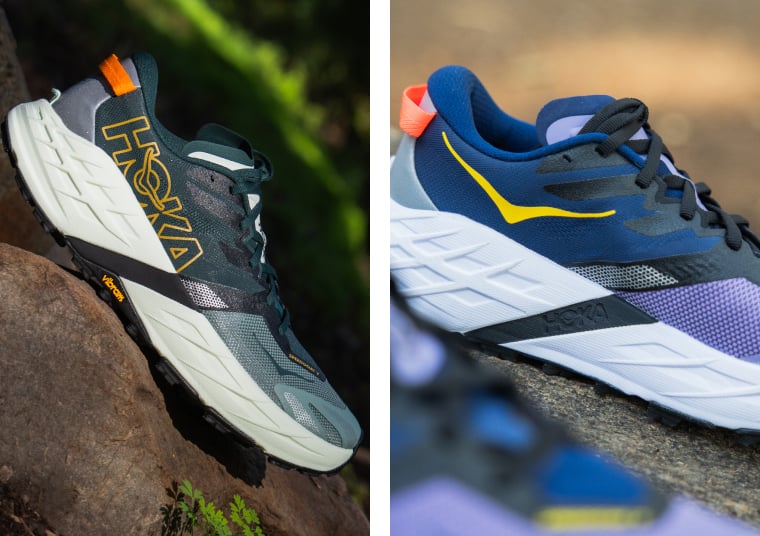
The upper is very much in that structured, snug-fit category that HOKA has leaned into with the Speedgoat line. It uses a fairly firm woven textile with overlays that effectively lock the foot in place. There isn’t a lot of stretch here, and that’s intentional - it’s designed to hold you steady when you’re moving through uneven terrain or descending at speed.
The lockdown through the midfoot is excellent, and the forefoot has just enough movement through the vamp to avoid feeling too restrictive. The toe bumper is quite rigid and protective.
The heel is structured and well-padded and the tongue is relatively thin with just enough cushioning at the top to prevent lace pressure without adding bulk. HOKA has also moved away from the flared heel design used in previous versions, which gives it a more traditional and familiar fit around the rear of the shoe. We now have a gaiter attachment, along with reflective details which will definitely appeal to anyone doing longer ultras or early morning starts and late finishes.
Fit-wise, it still runs on the narrower side compared to what a lot of brands are doing now. It’s not extreme, but it is noticeable if you’re used to wider trail shoes. There is a 2E option for those who need it, which is worth knowing.
Personally, I found the fit secure and dialled in, but combined with the tapered forefoot and the rigid toe guard, it did feel like my toes were sitting a bit closer to the front than I prefer. For that reason, I went up half a size.
3) Outsole tweaks to a winning formula
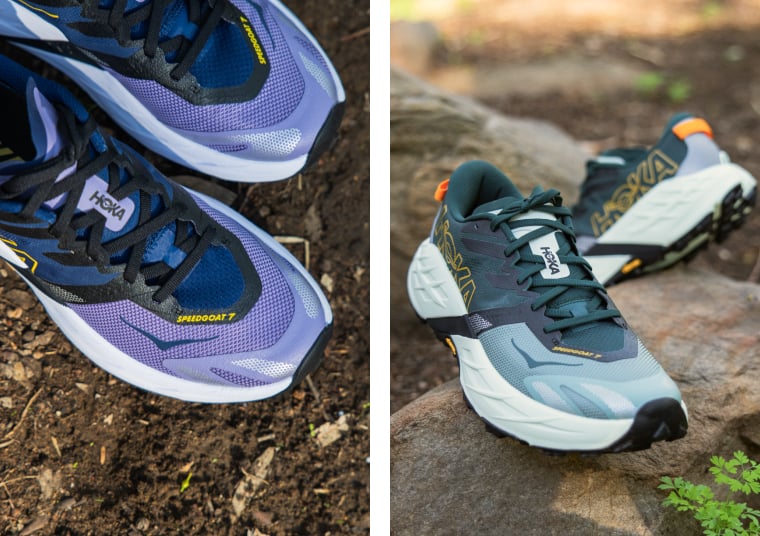
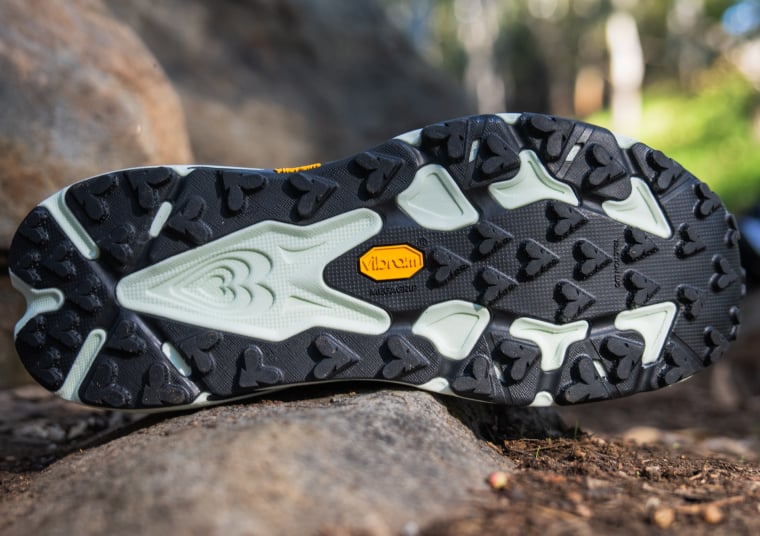
The outsole hasn’t been reinvented, and honestly, it didn’t need to be. You still get Vibram Megagrip paired with 5mm lugs and HOKA’s Traction Lug technology.
There are some subtle changes to lug shape and layout, but the overall feel remains very familiar. It’s still one of the most capable trail outsoles in this category, and it handles a huge range of terrain without really ever feeling out of its depth.
On local trails, I usually gravitate towards slightly smaller lugs because a lot of what we run here is hard-packed and relatively dry. Bigger lugs can sometimes feel a bit clunky on those surfaces. But the Speedgoat 7 somehow avoids that feeling more than you’d expect. It still rolls well on firmer ground, but when you hit loose or technical sections, it immediately comes alive.
Testing the Speedgoat 7: Early Feedback
Jessie & Seb have been testing the Speedgoat 7 over the last few weeks and here’s what they think so far:
Jessie
I found the HOKA Speedgoat 7 to be a really solid step forward from an already popular trail shoe. Straight away, it felt more connected from heel to toe, with a smoother, more cohesive ride. The cushioning has a bit more bounce and responsiveness too, which I really enjoyed.
The fit feels a bit more dialled-in as well, especially through the midfoot, which gave me more confidence on technical sections. That said, the toe box does feel slightly less roomy than the Speedgoat 6. I didn’t mind it, but if you liked that extra space up front, the wide option is probably worth a look.
For me, it’s one of those shoes I can see myself reaching for across the board - daily training, long runs and even race day for certain events.
Seb
This version of the HOKA Speedgoat 7 is probably my favourite to date - it actually reminds me a lot of the Speedgoat 4 and EVO, just modernised in the right areas. The standout for me is easily the updated midsole, which brings a bit more energy and fun to the ride without losing that protective feel.
The fit is probably my only small knock. As mentioned, I ended up going up half a size, so I’d definitely recommend trying it on in-store if you’re unsure about sizing. For me, it’s a shoe I’ll be reaching for across a lot of runs - midweek sessions, long runs, or anytime I want that extra protection but still feel confident moving through technical terrain. It’s also one I could easily see myself using for hiking as well.

Wrap-Up - is the GOAT back?
Honestly… yeah, I think it is.
The Speedgoat 7 feels like a return to form but with a modern twist where it matters most.
It’s back to being one of those shoes you can confidently recommend to almost anyone and back to being one of those shoes that you can confidently lace up knowing that it’ll be able to handle pretty much anything
For some people, it will be a daily trainer. For others, it will be a race-day shoe.
I’m not gonna lie, I do hope someday we see a slightly more anatomical fit from HOKA in the Speedgoat Line but until then is a compromise I’m willing to make to run in the GOAT.
Alternatives to consider
If you’re after something slightly different, here are a few worth looking at:
Merrell Agility Peak 6: Very similar design, firmer ride, even more aggressive outsole.
Brooks Cascadia 19: Also uses a supercritical-style foam but with a lower stack - feels more grounded and flexible.
ASICS Trabuco 14: Traditional feel, lower to the ground than the SG7, but with a roomier fit
About the author
Seb Lopez - Trail Runner & Photographer/Videographer
I’m passionate about trail running, hiking, adventure racing, and the outdoors in general. My favourite runs are long days spent with mates, exploring new places.
I also appreciate how different shoes allow me to connect with the terrain in unique ways and how that affects the running experience. When I’m not out on the trails, you’ll probably find me behind the camera. It’s great to be on the other side and see the sport from a different angle.