Your Run: What is a Tempo Run?

Tempo running is one of the most effective ways to build the strength, control and endurance needed to hold a faster pace for longer.
It is also one of the most misunderstood sessions in running. Tempo runs are often completed too quickly, treated like a race or confused with interval training. When performed properly, however, they can help you become a stronger and more efficient runner without the extreme fatigue created by faster training or longer running.
In this guide, we explain what a tempo run is, how it should feel and where it can fit into your training.
What Is a Tempo Run?
A tempo run is a sustained period of running at a controlled but challenging intensity, often described as comfortably hard.
You are running faster than your normal easy pace, but should still feel in control of your breathing, form and overall effort. For many runners, tempo intensity sits close to lactate threshold, where fatigue begins to build more quickly.
Your heart rate threshold zone will likely be zone 3 (via Garmin - Zone 3 (Aerobic): 70–80% of max heart rate. Moderate pace where holding a conversation gets harder.). You can read more about heart rate zones at Garmin.
A tempo run will generally feel like:
- An effort you could sustain for around 45 to 60 minutes in a race
- Around seven or eight out of 10 in perceived effort
- Deep, consistent breathing
- An effort where you can speak a few words, but not hold a conversation
- Challenging, without feeling like an all-out effort
The exact pace will vary with fitness, terrain, training load and experience, so focus more on effort than a specific number.
What Is the Purpose of a Tempo Run?
Tempo running helps improve your ability to hold a faster pace for longer.
Easy running builds your aerobic base, while shorter intervals develop speed and higher-intensity fitness. Tempo running sits between the two, helping connect endurance with faster running.
It can benefit runners across distances from 5 kilometres to the marathon, while also teaching you to recognise and control a strong effort without relying entirely on your watch.
Where Does a Tempo Run Fit Into Your Training?
Tempo running is generally one of the harder sessions in a weekly training plan.
For most recreational runners, one tempo or threshold-focused session each week is enough, balanced with easy running, a longer aerobic run and adequate recovery.
Avoid placing a demanding tempo run immediately before or after another hard session. Tempo pace should also remain purposeful rather than becoming the pace you default to whenever you feel good.
Keep your easy days easy so your harder sessions can do their job. 
How to Properly Complete a Tempo Run
A successful tempo session is built around control. The goal is to settle into the correct intensity, maintain it with good form and finish knowing you could have continued for slightly longer if required.
Begin With a Proper Warm-Up
Tempo running places more stress on the body than an easy run, so avoid moving immediately from standing still into your target pace.
Begin with 10 to 20 minutes of easy running. You may also include several short strides or gradual accelerations to prepare your legs for the faster effort.
Your warm-up should leave you feeling loose, responsive and ready to run strongly.
Start Conservatively
The opening minutes of a tempo run should feel controlled. It can take time for your breathing, heart rate and movement to settle into the effort.
Starting too quickly often turns the final part of the session into a struggle. This changes the purpose of the workout and creates more fatigue than necessary.
Allow the pace to come to you. It is better to finish slightly faster than to spend the second half slowing down.
Run by Effort, Not Ego
Weather, hills, fatigue and training load can all affect the pace you can maintain on a particular day.
Trying to force your usual tempo pace in hot, windy or difficult conditions may push the session beyond its intended intensity. Adjust your speed while maintaining the correct level of effort.
Your watch can provide useful feedback, but it should not override what your body is telling you.
Maintain Good Running Form
As the effort becomes harder, focus on staying relaxed through your shoulders, arms and hands. Keep your stride natural and avoid forcing an exaggerated movement in an attempt to run faster.
A tempo run should feel smooth and rhythmic. You are practising the ability to remain efficient while running under increasing pressure.
Finish With a Cool-Down
After completing the main tempo effort, run easily for another 10 to 15 minutes.
The cool-down allows your breathing and heart rate to gradually settle while adding some gentle aerobic volume to the session.
Tempo Run Workout Types
There’s many ways to structure a tempo run effectively, this will depend on your experience, fitness and current training goal.
Continuous Tempo
After warming up, complete 15 to 30 minutes at a controlled tempo effort before cooling down.
This is the traditional tempo format and teaches you to settle into a sustained rhythm without recovery breaks.
A newer runner may begin with 10 to 15 minutes, while an experienced runner may gradually build towards 30 or 40 minutes.
Tempo Intervals
Complete several longer repetitions at tempo intensity with short periods of easy jogging between each effort.
For example:
- 3 × 8 minutes at tempo effort with 2 minutes of easy jogging
- 4 × 5 minutes at tempo effort with 90 seconds of easy jogging
- 2 × 15 minutes at tempo effort with 3 minutes of easy jogging
Sometimes called cruise intervals, this format allows you to accumulate more time at the desired intensity without losing control. It can be a useful introduction to tempo training or an effective option during higher-volume training periods.
Progression Tempo
Begin the main section at a moderate effort and gradually increase the pace until you finish near tempo intensity.
This teaches patience and pace control while reducing the risk of beginning the session too aggressively.
The goal is not to sprint the final section. Each increase should feel gradual and deliberate.
Tempo Within a Long Run
More experienced runners may include a sustained tempo section or several controlled efforts within a longer run.
This can help prepare the body to run efficiently when the legs are already carrying some fatigue. It is particularly useful during half-marathon and marathon preparation, but it should be introduced carefully due to the additional training load.
Top Five Benefits of Tempo Running
1. Improves Your Ability to Sustain Faster Paces
Tempo running trains your body to continue working efficiently at an intensity above normal easy pace. Over time, this can allow you to maintain a faster speed before fatigue forces you to slow down.
2. Develops Aerobic Strength
Although tempo running feels challenging, it still relies heavily on the aerobic system. Regular tempo sessions can improve your ability to deliver and use oxygen while maintaining a strong, consistent effort. This makes tempo training useful for runners across a wide range of distances.
3. Builds Mental Control
Tempo runs require patience and concentration. You learn how to stay composed when the effort becomes uncomfortable, rather than responding by immediately slowing down or pushing too hard. This control becomes especially valuable during races, where poor pacing decisions early can have a significant effect later.
4. Improves Running Efficiency
Maintaining a controlled pace gives you an opportunity to practise running smoothly at a faster speed. As your body becomes more familiar with the effort, your breathing, stride and rhythm can become more economical. A pace that once felt demanding may gradually begin to feel more natural.
5. Bridges the Gap Between Easy Running and Racing
Tempo running introduces a stronger performance stimulus without requiring the speed or recovery demands of short, hard intervals. It helps prepare you for the sustained discomfort of racing while still allowing you to accumulate meaningful running volume.
Best Shoes for Tempo Running
There are no strict rules around what you wear for a tempo run. Your regular daily trainer can work perfectly well, particularly when you are first introducing faster running into your training. As your sessions become more structured, however, a lighter and more responsive shoe can make it easier to reach tempo pace, settle into rhythm and maintain that effort efficiently. The right choice can also depend on the session, whether you prefer the natural feel of a faster daily trainer, the propulsion of a speed-focused shoe or the added protection of a super trainer.
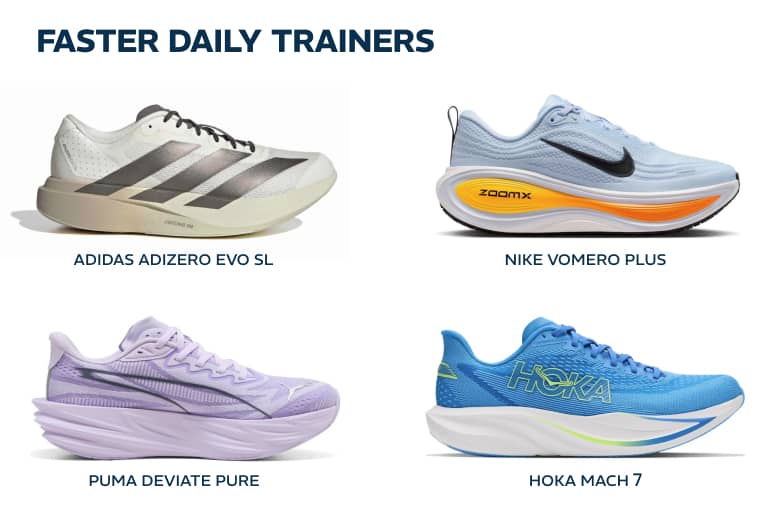
Faster Daily Trainers
Lightweight, responsive daily trainers can be particularly well suited to continuous tempos and progression runs. Their lighter, more flexible feel makes it easier to pick up the pace without adding too much structure, while still providing enough cushioning for the easier running around your tempo effort.
- adidas Adizero Evo SL - Lightweight, responsive with a very responsive pick up feel.
- Nike Vomero Plus - Plush and bouncy with cushioning that can comfortably move through faster efforts.
- PUMA Deviate Pure - Light and energetic with a more stripped-back feel.
- HOKA Mach 7 - Smooth, responsive and comfortable across changing paces.
Speed-Focused Trainers
For tempo intervals, repetitions or sessions with frequent changes in pace, some runners may prefer a more structured shoe. Plates, rods and performance-focused geometry, with a little less cushion, can add propulsion and make it easier to move back onto pace and maintain a strong rhythm through harder efforts.
- Saucony Endorphin Speed 5 - Smooth propulsion with versatile cushioning.
- adidas Adizero Boston 13 - Structured and responsive for faster training.
- PUMA Deviate NITRO 4 - Plated, energetic and built for pace.
- ASICS Magic Speed 5 - A sharper, more aggressive option for faster sessions.

Super Trainers
Super trainers can be especially useful when tempo efforts are built into a longer run. Their combination of responsive foams and additional cushioning helps you run efficiently at faster paces while providing the protection needed for the kilometres before and after the tempo work.
- ASICS Megablast - Responsive, protective and well suited to long runs with faster efforts.
- On Cloudmonster 3 Hyper - Highly cushioned and energetic for longer sessions with a sustained pace.
- New Balance SC Rebel v1 - Lightweight, bouncy and versatile with a responsive Infinion ride that makes it well suited to tempo efforts and quicker sustained running.
- adidas Hyperboost Edge - Max-cushioned, lightweight and energetic, with the responsiveness to handle sustained tempo efforts without sacrificing long-run protection.

These categories are only a guide. A faster daily trainer, speed-focused shoe or super trainer can all work across different tempo sessions depending on how you like your shoes to feel and the type of training you are completing.
Final Thoughts
Tempo running is not about proving how fast you can run in training. It is about developing the control and strength required to hold a meaningful pace without allowing the effort to fall apart.
The best tempo runs begin patiently, settle into a consistent rhythm and finish with your form still intact. You should feel like you completed a demanding workout, but not an all-out effort.
Start with a manageable amount of tempo running, focus on effort rather than ego and allow the session to progress alongside your fitness.
Completed consistently, tempo runs can help you become a stronger, more efficient and more confident runner across almost every race distance.
About the Author
Ed - Runner & Content Specialist
I’m a distance runner and Performance Content Specialist at RunDNA, with a passion for running, road and gravel cycling, quality gear, and the stories shaped by effort and adventure. My current focus is long-distance road running and triathlon, driven by a love of performance and the challenge of pushing body and mind further.