RunDNA Team: Our Tips For Your First Event 2026
Entered an event for the first time?
Taking on your first running event this year? It’s an exciting milestone. Whether you’re lining up for a 5km or going all the way to the marathon, it’s completely normal to feel a mix of nervous energy and anticipation around the event. To help you step onto the start line with confidence, we’ve asked members of the RunDNA team to share their number one tip for first-time racers. From pre race preparation through to race day advice, let’s dive in.
Training tips
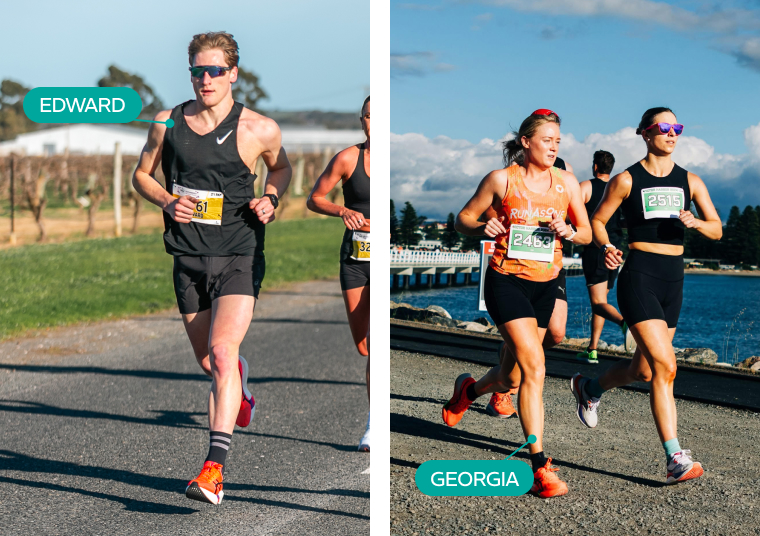
Edward
My advice for runners in their first event would be to focus on consistency over intensity. It’s easy to get caught up in running faster or pushing longer, but your biggest gains will come from showing up regularly and gradually building your distance each week. Prioritise rest days just as much as training days. This will allow you to really perform on the days that count.
Race day becomes a far more enjoyable and rewarding experience if you've put the work in during the training process. Leaving your first event with a positive experience means you'll be more likely to get involved in more down the track!
Georgia
To assist you with staying motivated and accountable in the lead up to your first running event; following a training plan specific to your event distance and goal or seeking advice from a running coach is a great idea. I found this super useful for my first event. This will also hopefully reduce the risk of picking up an injury throughout your training block so you can make it to the start line!
Adele
My advice is to have a structured training program in the lead up, but be open and flexible to modifying it if life gets busy! Just make sure you prioritise your longer runs as they are the runs that really help you feel prepared on the day.
Plan ahead!
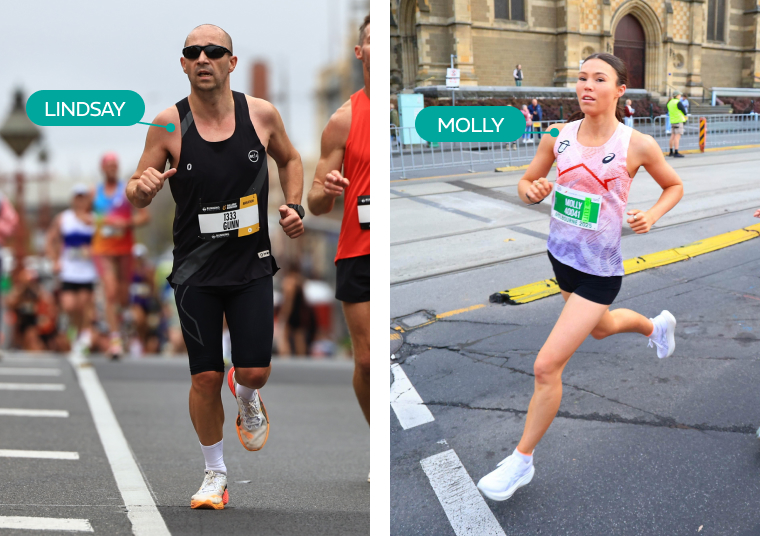
Lindsay
I would suggest planning everything that you can in advance - don't let yourself stress out about things that are completely in your control. For me, this means getting my race day kit, gels or anything I need for the event organised the night before so it's not a rush the morning of. I also like to keep the food I eat the night before the event something familiar or something that I've tried during my training block.
Rhys
I think it can be useful to have a set target time in mind for the first 10% of the race. For example, if it was a 10km race and your aim is to run under 60 minutes, you would try to be at the 1km mark as close to 6 minutes as you can. It's really easy to get swept up in the adrenaline and excitement of the race and run too fast early on. I'd also suggest it's better to be slightly over your target for the first part of your race than way under. A pacing strategy can help you finish the race strong and make your first event experience a positive one.
Expectations and mindset
Molly
For my first race, I learned that nerves are natural and not something to avoid. That nervous energy can actually help your race if you choose to see it as excitement instead of fear. I focused on thinking positively and not letting the whole race overwhelm me. Instead of worrying about the full 5km, I broke it down kilometre by kilometre, which made it feel manageable and kept me present. Expect it to be hard work, but also incredibly rewarding, don’t let the nerves control your race, enjoy it!
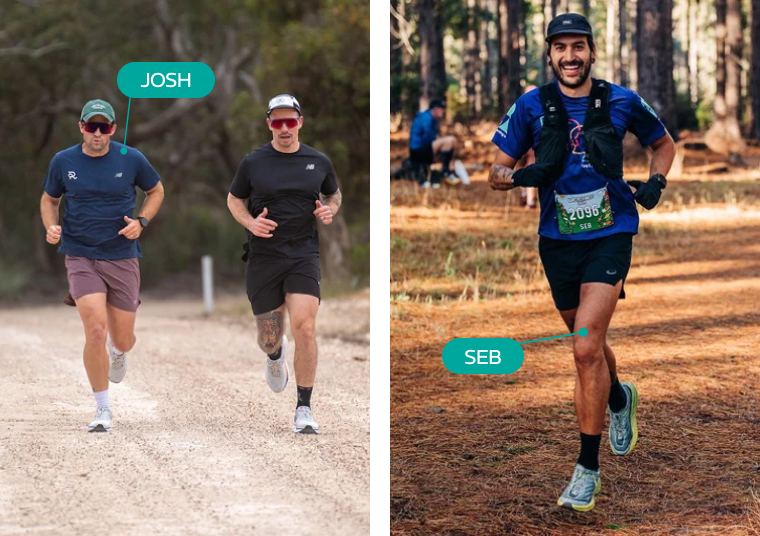
Seb
For your first running event, focus on enjoying the experience and taking it all in. Run at a pace that feels right for you, and don’t get caught up on how others are doing, they’ve likely been at it longer. Think of your first event as a starting point, not a performance to measure yourself against everyone else. There will be plenty of other races to improve and learn from, so keep it simple, soak up the atmosphere, and enjoy the moment of crossing the finish line.
Josh
Stay flexible during your first race, things might not go as planned and that’s completely fine. Whether it’s running a bit slower than expected or facing an unexpected challenge, treat it as part of the experience. Keep a clear head, focus on doing your best in the moment and remember that simply finishing is something to be proud of.
Finding what works for you
We hope these tips help you feel ready to take on your first event. As you gain more experience preparing for running events, you’ll start to discover what works best for you and how to bring out your best on the day. Most importantly, don’t forget to have fun and enjoy the experience for what it is.
First Event Shoe Choice
Finally let's talk about what's on your feet. Your first event shoe depends largely on your event goal. If you're looking to finish with no time goal then comfort and reliability are your best bet. A trusted daily trainer would be the best option. Some suggestions are: Nike Vomero Plus, Asics Nimbus 28 and Puma Mag Max 2.
If you've followed a training plan and are chasing a time goal you could consider a more responsive option like a plated daily trainer or super trainer. Some popular shoes in this category include: Asics Megablast, New Balance Fuelcell SuperComp Trainer v3 and Saucony Endorphin Speed 5.
To learn more about what shoe you should race in, read this blog going into more detail.
About the author
Edward Copas - Runner & Content Creator
I’m passionate about all types of running, road and gravel riding, content creation, quality gear and the stories that follow training and adventure. Triathlon and long distance road running are my current focus as I love pushing the boundaries of the body and mind.